


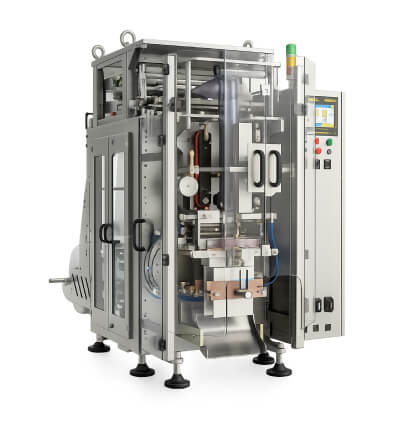
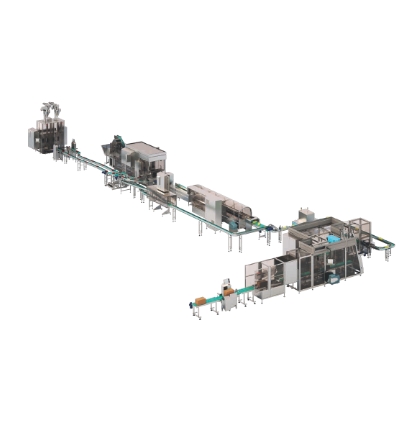
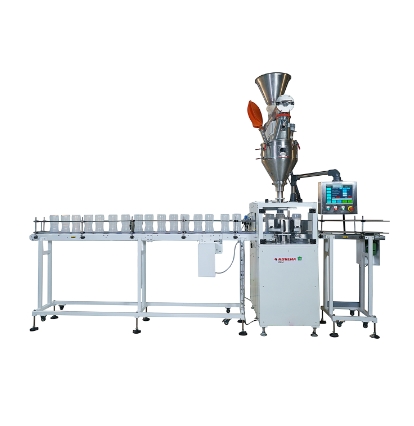

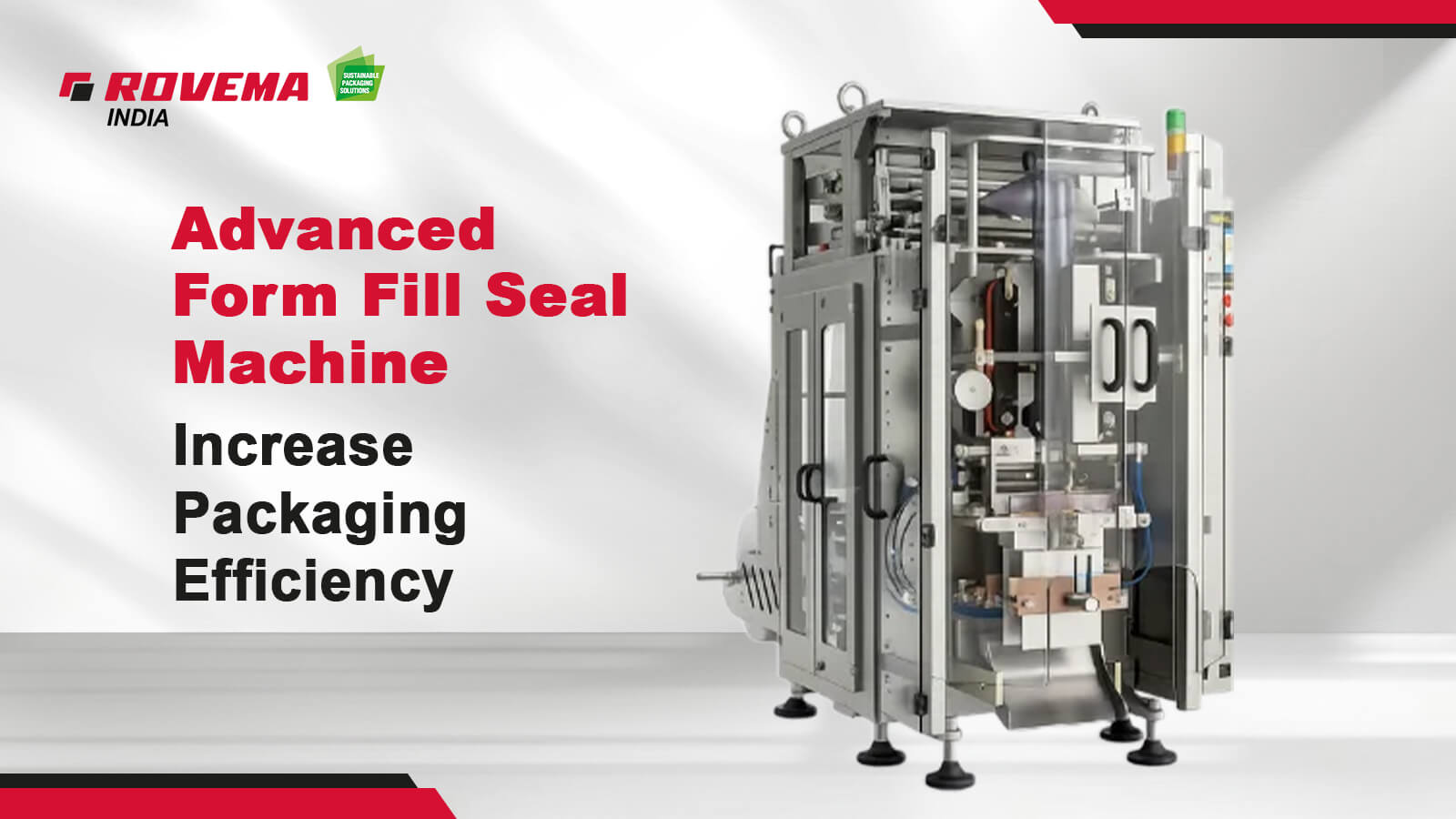
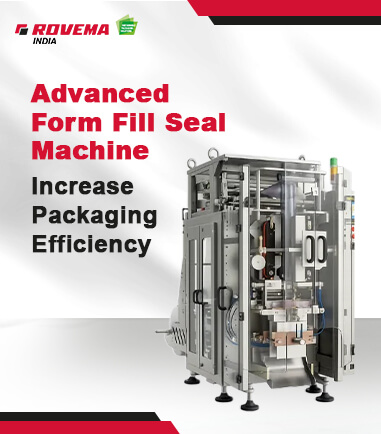
A form fill seal machine forms a pouch from a roll of film, doses the product into it, and seals it, all in one continuous cycle. How well that cycle runs, at what speed, with how much waste, and how consistently, sets the packaging efficiency of the entire line.
For manufacturers packing powders, granules, and liquids at scale, an advanced FFS packaging machine is one of the most direct ways to lift production throughput without adding shifts or floor space.
What Is a Form Fill Seal Machine?
A form fill seal machine takes flat roll-stock film, forms it into a pouch, fills it with product through a paired dosing system, and seals it shut in a single pass. Run vertically, this is a vertical form fill seal machine, or VFFS machine, and it can operate in continuous or intermittent motion depending on the product and pack style.
- Pillow, gusseted, and block-bottom pouches.
- Quad-seal and penta-seal formats.
- Three- or four-side-seal sachets.
How Does a Form Fill Seal Machine Increase Packaging Efficiency?
- The dosing system and bagger operate as one coordinated unit, not two independent stations.
- Format and pack style stay consistent through the run, so downstream handling doesn’t need adjustment.
- Fewer manual touchpoints mean fewer opportunities for product loss or pack defects.
How Does an Advanced FFS Machine Improve Speed and Production Throughput?
- Recipe-based, guided changeovers recall settings instead of requiring manual resets.
- Tool-less or minimal-tool format parts cut the time lost between SKUs.
- Multilane systems scale output for powders, granules, and liquids without adding a second machine.
How Does Filling Accuracy Improve Seal Integrity and Reduce Packaging Waste?
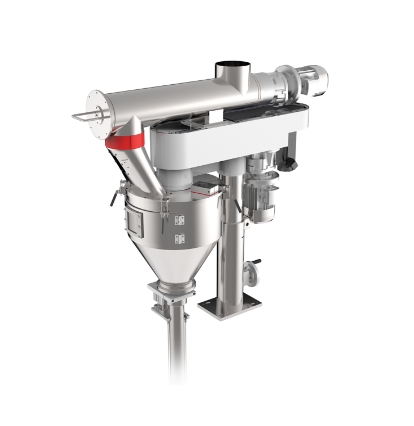
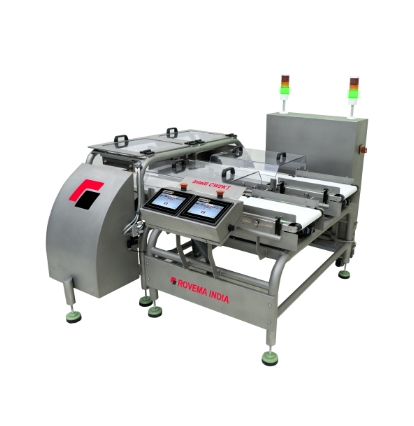
- Stealth– a weigh-metric filler built for free-flowing and dusty granular products, dosing from 50g up to 10kg while holding a tight target weight at full line speed.
- dosEQ – reads a product’s density, flow rate, and other physical behavior in real time, keeping dosing accurate even as bulk density shifts batch to batch on non-free-flow and semi-free-flow materials.
How Does Rovema’s Technology Help to Reduce Downtime for Continuous Production?
- The system self-corrects film centering, temperature, and jaw pressure in real time, which is what keeps output steady from the first pouch of a shift to the last.
- Servo-driven motion holds speed and jaw timing steady even as pack weight or product changes, so the line doesn’t need to slow down to stay in control.
- Rovema India’s Life Cycle Services model backs this with genuine spares kept in-country, remote diagnostics for fast fault-finding, and field engineers positioned across India.
- Commissioning, calibration, and format-specific operator training keep the machine performing to spec well past installation.
