



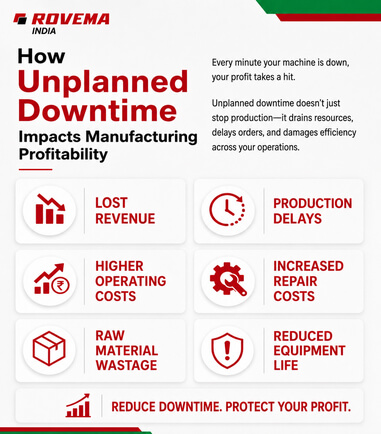
A production line earns money only while it is running. The moment it stops without warning, that earning flips into a loss, and the loss is almost always bigger than the repair bill that caused it.
That is the trouble with unplanned downtime. It is any unscheduled halt in production, such as an unplanned fault. Unlike scheduled maintenance or a changeover, it cannot be budgeted, staffed, or worked around in advance. For manufacturers running powders, granules, or viscous products at volume, a stoppage of a few minutes rarely lasts a few minutes.
Let’s see how lost time eats into profitability, and what keeps a line running when others stall.
The True Price of a Stalled Line:
The headline numbers are sobering. Siemens’ True Cost of Downtime research estimates that the world’s 500 largest manufacturers forfeit roughly $1.4 trillion every year to unplanned stoppages, about 11% of their combined revenue.
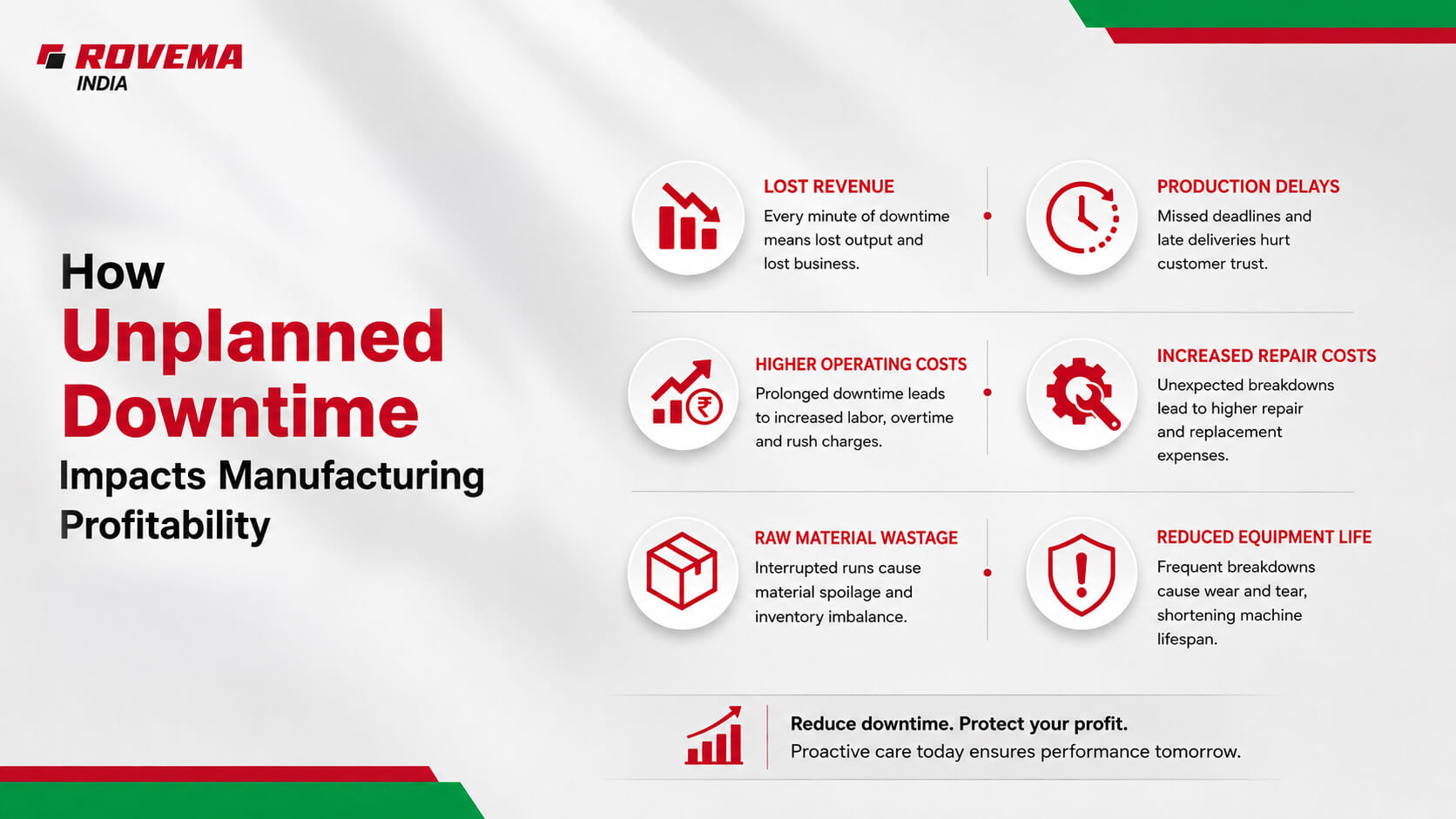
Yet the invoice you can see is never the full bill. The real expense hides in the margins:
- Scrapped product and film, since whatever sits in the machine at the moment of failure rarely survives.
- Paid idleness, as operators and engineers draw wages through the stoppage, then overtime afterward to claw back the schedule.
- Broken promises, where a late shipment carries penalties and a quieter, longer-lasting cost to the customer relationship.
- Emergency premiums on rushed parts and out-of-hours callouts that dwarf the price of planned service.
None of this arrives as a single dramatic blow. Fluke’s research found that most manufacturers absorb several downtime events in a typical week. Individually minor, collectively ruinous.
How Downtime Hollows Out OEE?
Plants that measure their performance feel downtime first in their OEE, Overall Equipment Effectiveness, the benchmark for how much planned production actually becomes saleable product. The measure rests on three pillars: availability, performance, and quality.
Unplanned stops strike availability directly. But the harm rarely ends there. A machine fighting to stay upright tends to run slower and reject more, dragging the other two pillars down in sympathy.
The typical manufacturer hovers near 67% OEE, whereas world-class manufacturers reach roughly 85%. That distance is composed largely of downtime and the instability it breeds. Recover even a slice of it, and you unlock capacity already bought and paid for, with no new machine required.
Where the Stoppages Begin?
Strip away the variety, and most unplanned downtime springs from a familiar few sources:
- Equipment failure from worn components and ageing drives is the single largest contributor across the sector.
- Sluggish, improvised changeovers, where every unscripted minute between formats is runtime surrendered.
- Film and material faults, such as web breaks, jams, and tracking trouble.
- Skill gaps and human error, since a machine operator untrained on the formats it actually runs loses precious minutes when something slips.
- Delay in procurement of spare parts, where a critical component stuck on a slow import order can stop an entire line for days.
- After-sales service that doesn’t follow through, where a support team that’s hard to reach or slow to respond turns what should be a two-hour fix into a two-day halt.
The encouraging part is how much of this list is avoidable.
Engineering a Line That Refuses to Stop:
The decisive shift of the past decade has been a change of posture, from repairing failures to forestalling them. Three disciplines carry the weight:
- Preventive maintenance, scheduled against run time, is essential for the floor beneath any serious operation.
- Predictive maintenance, where sensors and data expose a fault while it is still a warning rather than a wreck. Adopters routinely trim unplanned stops by 35 to 45%, often recovering the investment inside the first year.
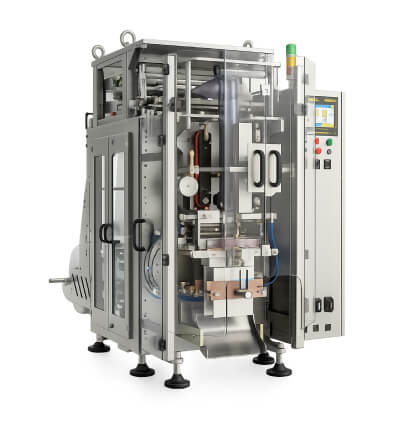
Much of this resilience, though, is determined long before a line is switched on, in the machine’s design. Rovema India engineers its vertical form-fill-seal platforms for endurance, not headline speed alone:
- Servo-controlled motion holds output precise and repeatable, so throughput does not wilt the way it does on weary, pneumatic-era equipment.
- Real-time diagnostics and remote troubleshooting let engineers isolate a fault fast, frequently before anyone reaches the floor, compressing the costliest form of downtime.
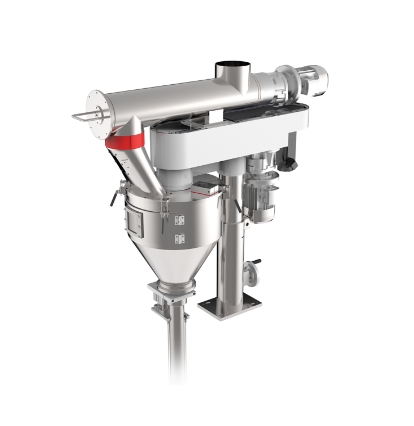
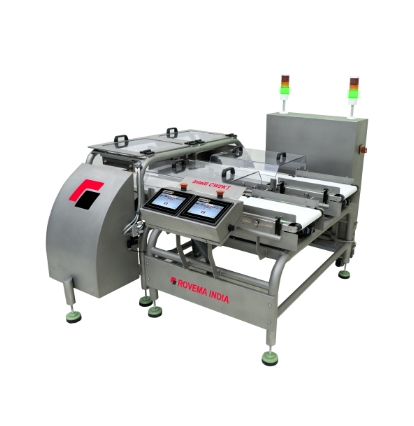
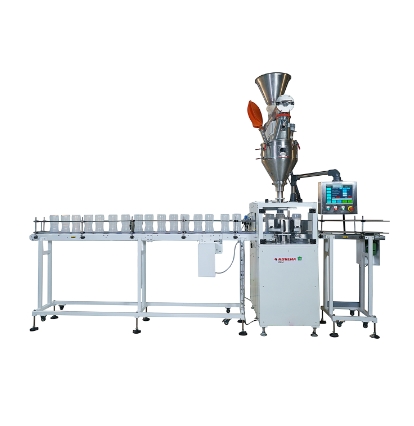
- Steady dosing keeps weight true across a long run. Whether dosEQ is metering a non-free-flowing powder or Stealth is weighing a free-flowing material, dependable fills mean fewer manual corrections and fewer halts, with clean, leak-free packs standing as the evidence at the line’s end.
- Minimal changeover time recovers the runtime ordinarily lost between SKUs.
Conclusion:
Unplanned downtime is easy to file under maintenance and just as easy to underestimate. In truth, it is a profitability question first, draining margins, depressing OEE, and quietly straining the delivery commitments that hold customers close. The manufacturers moving ahead are those who have stopped treating uptime as good fortune and started treating it as something to be engineered.
If your line surrenders more hours than it should, Rovema India can help you build one that holds.
Tell us your product type, your output targets, and where the line hurts today, and our application engineers will study your setup, trial your material, and design packaging equipment made to keep running. Contact us today to begin.
