



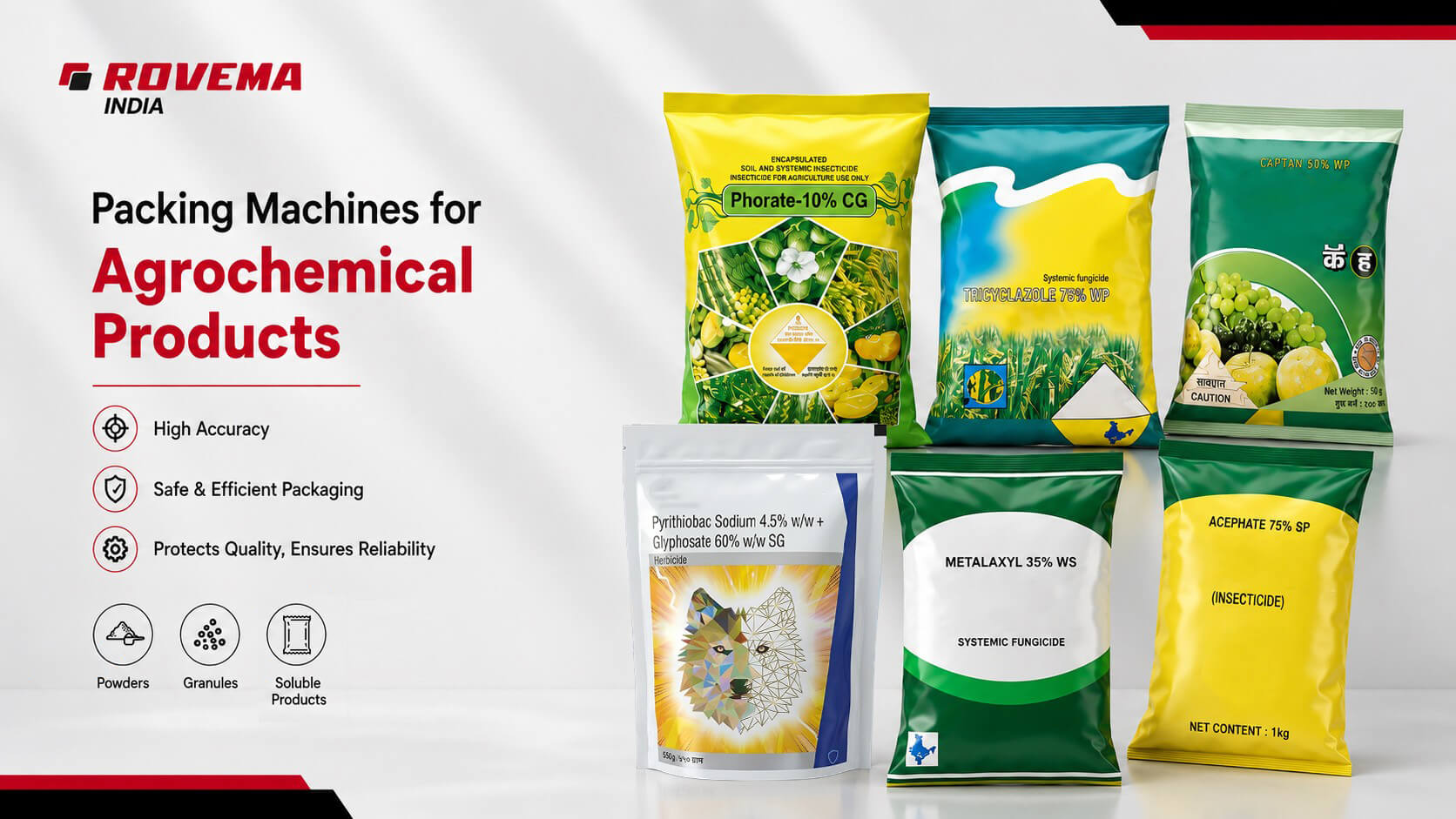
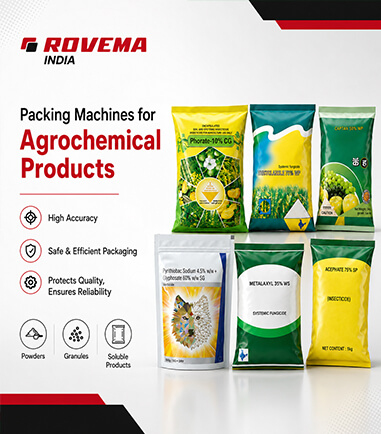
Agrochemical products need to be packed differently. A granular fertilizer, a wettable powder pesticide, and a liquid herbicide concentrate each have different handling requirements at the filling stage, and each product also requires labeling that accurately matches what’s in the pack – a standard both regulators and customers hold manufacturers to.
Selecting the right packing machine for agrochemical products begins with understanding what makes this category difficult to pack.
What Makes Agrochemical Packaging Different?
Agrochemical packaging spans a wider range of formulation types than most categories on a plant floor. A single facility may run granular fertilizers, dusty powder concentrates, and liquid crop-protection products through the same line, often within the same production week.
- Granular fertilizers and insecticide granules flow with relative ease, though bulk density can vary meaningfully from batch to batch.
- Wettable powders and dust-based formulations are fine and light, prone to bridging or clumping within a hopper.
- Liquid concentrates demand volumetric accuracy rather than weight-based dosing, where consistency matters as much as throughput.
What Are the Challenges in Agrochemical Packaging?
- Precision dosing under regulatory scrutiny–
Agrochemical labels declare active ingredient content by weight or volume. Underfilling is a compliance risk, while overfilling reduces the margin on active ingredients that are costly to source. - Dust and fine particle control–
Powder-based formulations generate dust during filling. Beyond the implications for housekeeping and worker safety, any residue that settles into the seal area undermines the finished pack’s overall quality. - Leakage and moisture protection through transit –
Agrochemical packs travel through distribution networks under variable conditions. A weak seal or moisture ingress does more than create a mess. It’s a failure at the two things packaging exists to do: protect the contents from damage and preserve them until use. For agrochemicals, that failure shows up directly as reduced product efficacy in the field.
How Does the Right Solution Address Each Challenge?
The starting point is matching the dosing system to the formulation.
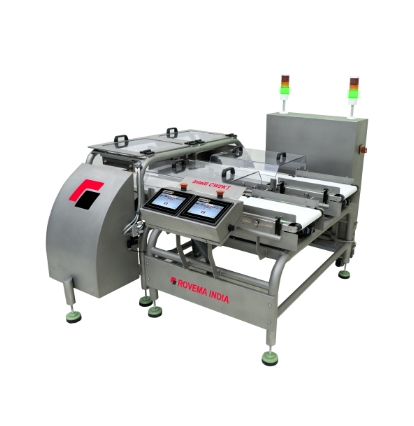
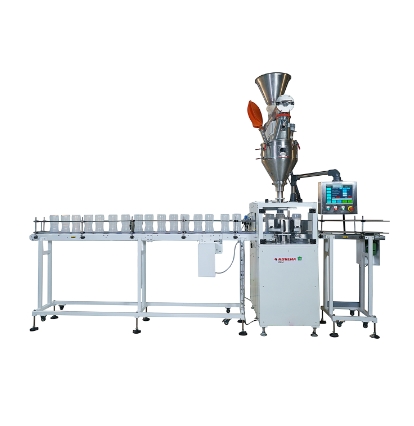
- Free-flowing granular fertilizers and insecticide granulescall for a weigher such as Rovema’s Stealth, engineered to sustain weight accuracy at speed and hold pack weight close to target.
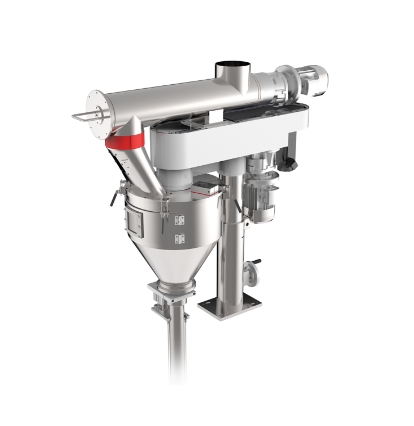
- Dusty, wettable powders and other non-free-flow or semi-free-flow formulations require a system such as dosEQ, which compensates for shifting flow behaviour rather than dosing against a fixed assumption, preserving accuracy even when the product itself is unpredictable.
- Liquid concentrates are best served by piston fillers that delivers a consistent dose independent of product viscosity.
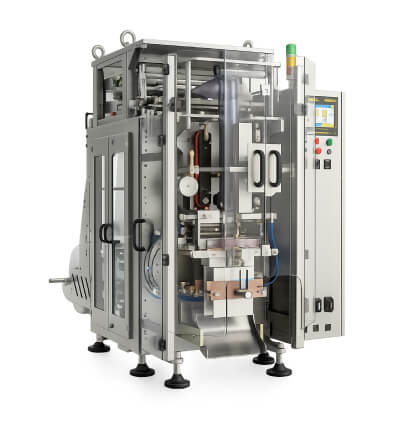
Pair it with the bagger, and you’ve got a complete dosing control system, one that keeps actual pack weight in line with what’s declared on the label. This distinction matters more here than in categories without label-mandated declarations.
Pack quality substantiates the rest. When the dose is delivered cleanly, the seal closes without product residue compromising the seam, preserving the moisture barrier and active ingredient integrity through handling and storage. And because the platform is not confined to a single pack style or size, retail sachets and bulk trade bags can run on the same line without major modification.
How the Solution Plays Out on the Plant Floor?
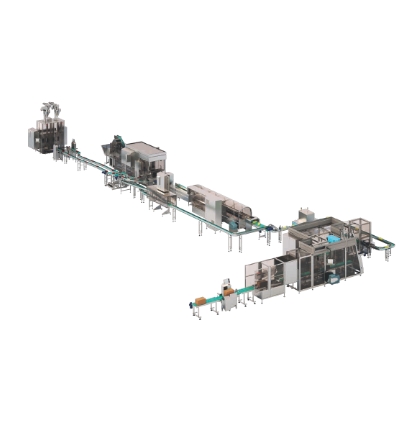
The practical outcome is a line that maintains its accuracy irrespective of which formulation is running on a given shift: fewer rejections attributable to weak seals or dust-contaminated seams, reduced reliance on overfill as a safety margin, and format transitions that do not cost a day of downtime.
How to Choose a Packing Machine for Agrochemical Products?
- Start by knowing what you’re actually packing: granular, powder, or liquid.
- Do a trial with your product and packaging, since agrochemical formulations vary significantly between suppliers and batches a generic demo won’t tell you much.
- Ask for performance data from a full production run and check if the dosing system is accurate over that stretch.
- Because agrochemical packaging frequently operates on tight seasonal timelines, confirm local service and spare-parts support before committing, not after a breakdown occurs.
Getting It Right From the Start:
Agrochemical products afford little margin for approximation. A packing machine designed for a different category and simply repurposed rarely withstands the dust, the density variability, and the compliance expectations this category demands.
For manufacturers evaluating a packing machine for agrochemical products, share your formulation types, pack formats, and daily output targets with Rovema India. Our application engineers will match the appropriate dosing system, trial it against your actual product, and provide verified performance data before you commit.
Reach out to Rovema India today to build a line equipped to meet what agrochemicals demand.
