


In the age of online grocery shopping, a pouch doesn’t just need to look good on a shelf; it needs to survive a warehouse, a courier van, and a doorstep drop. That changes what manufacturers need from their packaging lines entirely.
Here’s how manufacturers need to think about the machines producing cereal packaging that can meet the demands of today.
How E-Commerce Has Raised the Bar for Breakfast Cereal Packaging?
When cereal sells through a physical store, packaging only has to survive a short supply chain: factory, distributor, shelf. E-commerce breaks that model entirely.
Direct-to-consumer delivery isn’t kind to packaging. By the time a pouch reaches the doorstep, it’s been through sorting hubs, conveyor systems, and at least one delivery vehicle. Seals designed for a simple retail run simply weren’t built for that level of handling.
This reality pushes breakfast cereal packaging toward:
- Seal strength to survive multi-point handling.
- Formats designed for fragility, especially for flake and cluster-type cereals.
- SKU versatility, from single-serve sachets to family-size bags. At the same time, the growth of digital channels has widened the range of SKUs manufacturers are expected to handle. Packaging lines need to deliver high throughput while staying flexible enough to switch between formats without requiring a full-line shutdown.
Speed and Accuracy: The Two Things You Need
When demand is high, the instinct is to push for more output. Speed matters, but a fast machine that can’t fill accurately is just burning through product faster. It’s only when speed and precision work together that manufacturers can meet demand without compromising on quality.
High-speed automated cereal packaging systems must maintain filling accuracy throughout a full production run.
The dosing system matters just as much as the machine’s top speed. It depends on the product’s bulk density, its flow characteristics, and how it behaves under sustained production conditions.
A product with variable bulk density behaves differently from run to run, and the filling system must account for this without requiring constant operator correction. This is exactly the kind of challenge that a precision packaging line overcomes.
What a Modern Cereal Packaging Machine Actually Does?
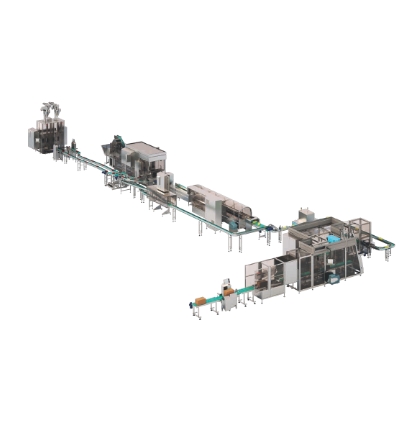
Modern automated cereal packaging systems for food manufacturers go well beyond bag-forming. A good cereal packaging line isn’t just one machine; it’s several systems that need to work together.
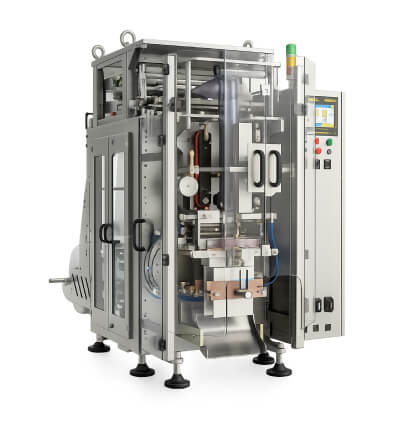
1. Bagger -
Vertical form-fill-seal machines are the backbone of every high-volume ready-to-eat cereal packaging operation. They run continuously, forming the bag from a film reel, filling it with product, and sealing it in one seamless motion.
Rovema’s VFFS range covers:
- Single-tube setups.
- Multi-tube configurations.
- Multilane sachet systems.
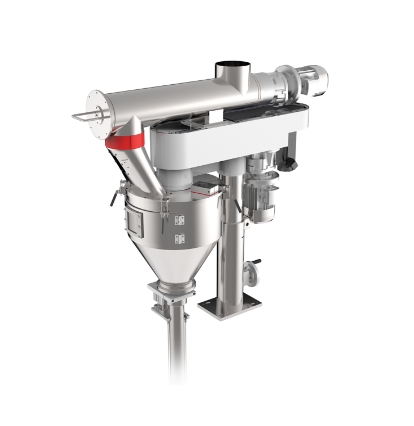
2. Dosing or Weighing -
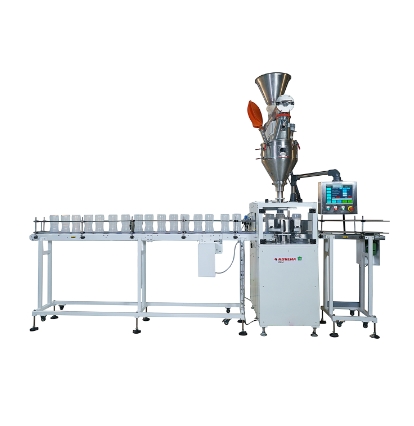
- For granular, free-flowing cereals, Rovema’s Stealth platform is built specifically to handle variable-flow products cleanly and consistently.
- For finer cereal-adjacent products like oat powders or malt-based blends, dosEQ delivers controlled, repeatable dosing without relying on constant operator correction.
Both systems ensure accurate dosing and weighing every shift.
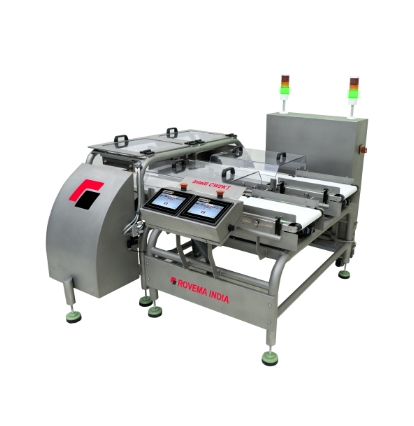
3. Inline Checkweigher -
Once a pack is sealed, Rovema’s Checkweigher verifies its weight while it’s still moving down the line. Anything that falls outside the set tolerance gets rejected on the spot. The data collected helps production teams get live visibility into weight trends and reject rates, so problems get caught while there’s still time to act on them.
This is where Industry 4.0 practices show their value on a cereal line. Weight trends, reject rates, and filling performance are all tracked live, so if something starts drifting, the team knows about it mid-run rather than at the end of a shift.
4. Print and Code Integration -
Applies best-before dates, batch numbers, and barcodes. This is increasingly critical for e-commerce traceability and regulatory compliance.
5. End-of-Line packaging -
Includes case packing and carton sealing, which determine how efficiently packs are consolidated for last-mile delivery.
Rovema designs all end-of-line solutions, such as case packing, carton sealing, and more, meaning manufacturers have one accountable partner for the complete line.
A Machine for Every Pouch Format Used in E-Commerce:
E-commerce has multiplied the number of pouch formats manufacturers are expected to run. More cereal variants, new pack sizes, and a wider range of retail and direct-to-consumer SKUs mean the right machine for one format isn’t always the right machine for another.
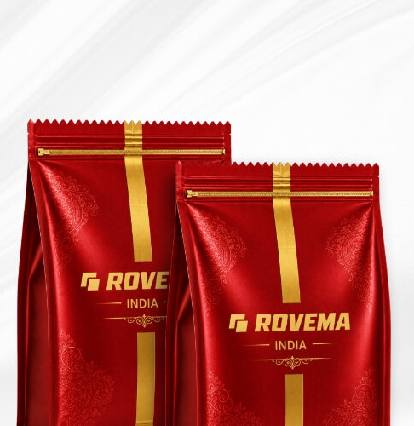
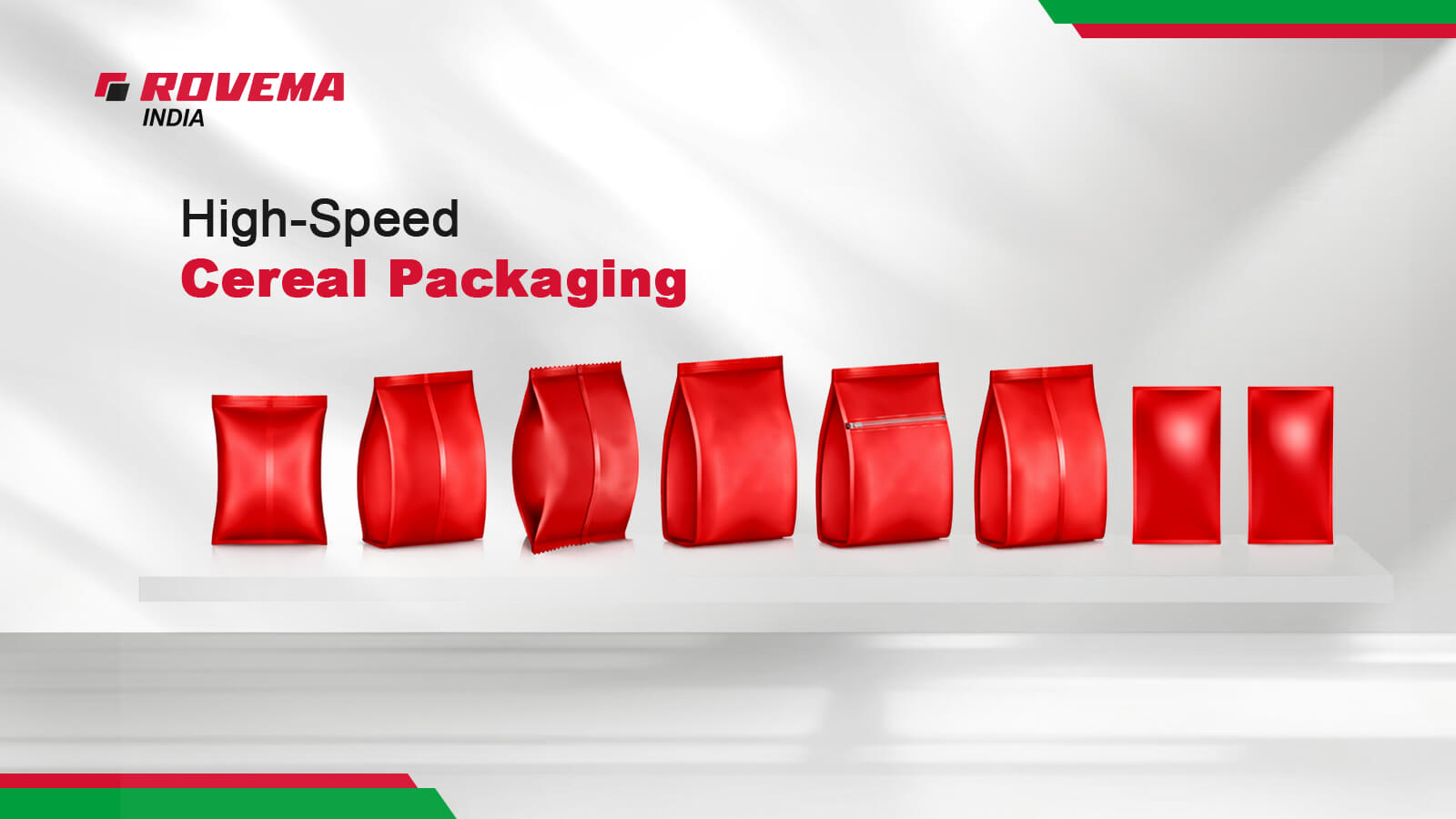
Rovema manufactures machines for every type of pouch used in e-commerce cereal packaging: pillow pouches, gusseted bags, block-bottom standup formats, flat sachets for single-serve packs, and resealable formats for premium channels. Rather than one machine handling every format, the right approach is selecting the right machine for the formats you actually run, with a partner who understands what each format demands from the sealing, film handling, and dosing system.
Conclusion:
High-speed cereal packaging in the e-commerce era isn’t about finding the fastest machine. It’s about finding the most consistent one. A line that holds accuracy across a full shift, keeps up with the demand, and survives direct-to-consumer logistics.
If you’re evaluating cereal packaging machines or planning a line upgrade, Rovema can assess your product, formats, and output targets and provide trial results before you commit.
Get in touch today to start the conversation.
FAQs
1. Why is high-speed packaging important for cereal manufacturers?
Keeping up with today’s demand is what ensures profitability. Speed, when paired with accuracy, is what ensures that cereal manufacturers stay profitable.
2. How has e-commerce influenced cereal packaging?
Packs now travel further and get handled more before they reach the customer. That puts real pressure on seal quality and structural integrity in a way traditional retail never did.
3. What are the key benefits of automated cereal packaging lines?
Consistent fill weights, fewer stoppages, less reliance on operator judgment, and better overall line discipline, especially across long production runs.
4. What should manufacturers consider when choosing a cereal packaging system?
Look past the purchase price. Giveaway accuracy, changeover time, film waste, service response, and long-term running costs are what you need to look for.
